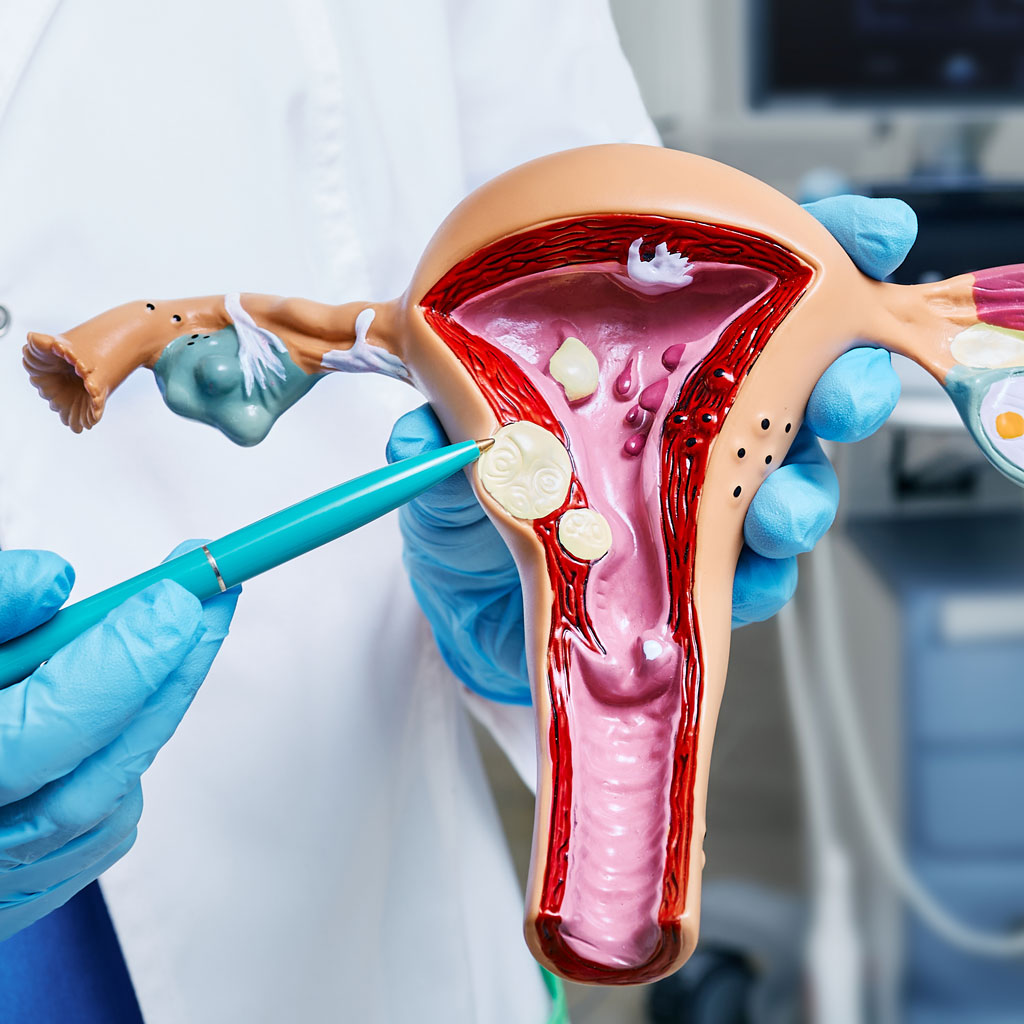
Hearing that you may need a hysterectomy to treat fibroids can feel overwhelming. For many women, it can raise additional questions about recovery, long-term health, and whether there are other options.
If you’re searching for a hysterectomy alternative for fibroids, you should have straightforward information and know your options. One of those options is Uterine Fibroid Embolization (UFE) — a minimally invasive treatment designed to relieve fibroid symptoms without major surgery.
Knowing the difference between how UFE treats fibroids vs. hysterectomy can help you feel more confident about what to do next.
You Have Options Beyond Major Surgery
Having uterine fibroids is quite common; approximately 26 million women are affected, and while they aren’t cancerous, they sure can make life difficult. Dealing with heavy periods, feeling pressure in your pelvis, bloating, needing to pee all the time, and being tired all the time because of blood loss can really bring you down.
For a long time, the usual fix was a hysterectomy – taking out your uterus. And while it works, it’s still a big operation. Expect anesthesia, cuts, and weeks spent recovering.
It’s completely valid to pause and ask:
Can I treat my fibroids without removing my uterus?
For many women, the answer is yes.
What Is Uterine Fibroid Embolization?
Uterine Fibroid Embolization is a minimally invasive, image-guided procedure performed by a specially trained physician called an interventional radiologist.
How UFE treats fibroids begins at their source — by closing off their blood supply.
A tiny cut is made in your wrist or groin, and a small tube is guided to the arteries feeding the fibroids. Small particles are then put in to stop the blood flow. If there’s no blood, the fibroids shrink slowly and symptoms improve over time.
There are no large incisions, the uterus remains in place, and for many women, relief comes without the physical and emotional weight of major surgery.
UFE vs. Hysterectomy: What Feels Right for You?
When you’re trying to decide between UFE and a hysterectomy, the big things to think about are how fast you’ll recover, how intense the procedure is, and what’s most important to you.
A hysterectomy permanently removes the uterus. For some women, that feels like the right and definitive solution. For others, preserving their uterus is important — whether for emotional reasons, body integrity, or future possibilities.
On the other hand, UFE offers a uterus-preserving approach. Most patients return to normal activities within one to two weeks. In contrast, hysterectomy recovery can take six to eight weeks, depending on the surgical method.
Neither choice is “one-size-fits-all.” What matters most is that you understand both options and choose the one aligned with your goals.
Effectiveness of How UFE Treats Fibroids?
For appropriately selected patients, Uterine Fibroid Embolization has been shown to provide significant symptom relief. Many women notice lighter periods within the first few cycles. Pelvic pressure and bloating often improve gradually as fibroids shrink — commonly by 40-60% within six months.
Because the uterus is not removed, hormonal balance is typically maintained. Most women continue normal ovarian function after treatment.
Relief is not just physical — it’s often emotional. Feeling heard, supported, and empowered in your treatment decision can make all the difference.
Is UFE Right for You?
Every woman’s situation is unique. Fibroid size, location, overall health, and future reproductive plans all matter. That’s why a thoughtful evaluation, often including MRI imaging, is important before deciding on treatment.
If you’ve been told hysterectomy is your only option, it’s reasonable — and responsible — to seek a second opinion. Exploring how UFE treats fibroids doesn’t mean rejecting medical advice; it means making sure you fully understand your choices.
Moving Forward with Confidence
Living with fibroid symptoms can feel exhausting. But feeling pressured into a major surgery without exploring alternatives can feel just as difficult.
Uterine Fibroid Embolization offers many women meaningful relief without major surgery, long recovery times, or permanent organ removal. When thoughtfully considered alongside hysterectomy, it represents an empowering, evidence-based option.
The specialists at PrecisionIR perform advanced image-guided procedures like Uterine Fibroid Embolization that treat the condition at its source without major surgery or lengthy recovery.
Schedule a consultation with PrecisionIR today to learn if UFE is right for you.