1. Home
  2. [Treatments] GAE: A New Treatment for Knee Osteoarthritis

GAE: A New Treatment for Knee Osteoarthritis

Benefits | GAE Candidates | GAE FAQs | Candidate Quiz

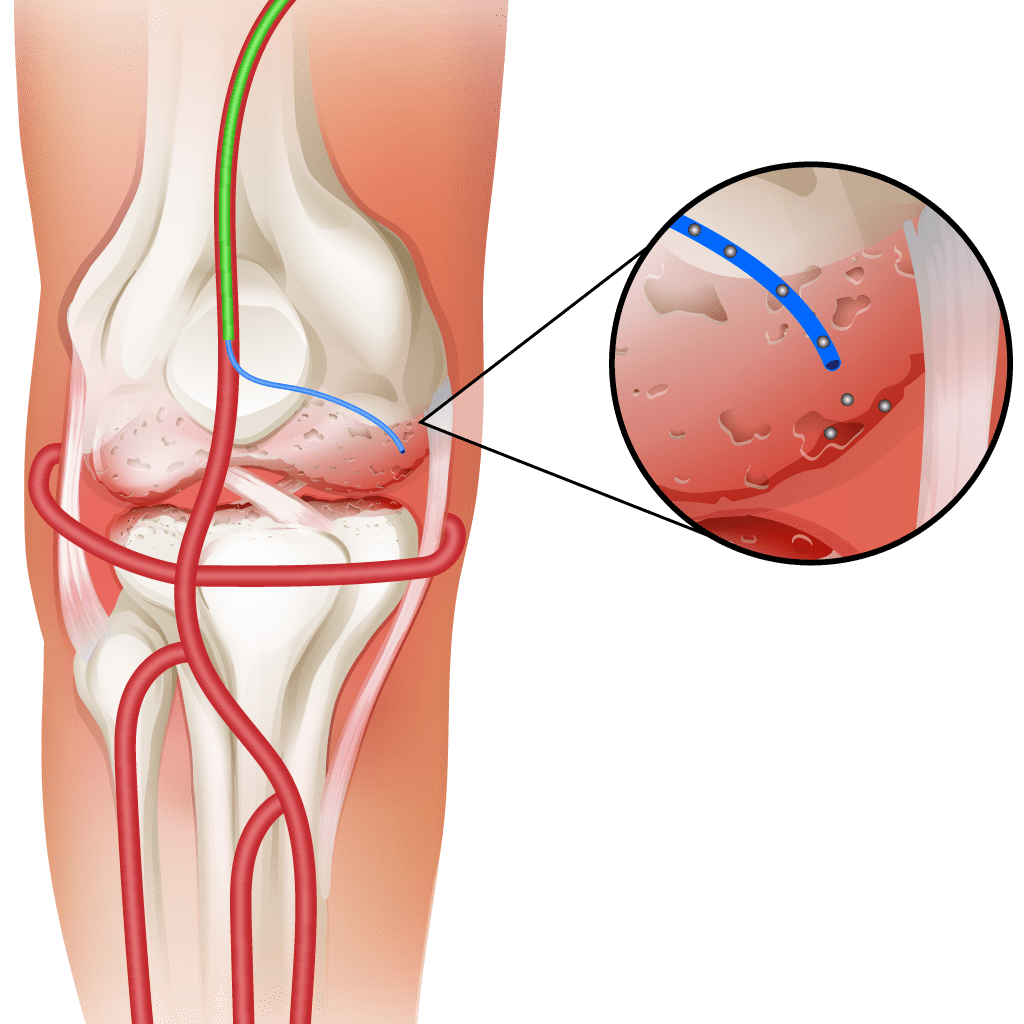
Genicular artery embolization (GAE) is a minimally invasive procedure to treat osteoarthritis of the knee. The procedure reduces the flow of blood to the synovium—the lining of the knee—which in turn reduces inflammation and the associated pain.

How GAE Works

GAE is performed by an interventional radiologist who inserts a tiny catheter into an artery in your upper thigh or wrist and then uses imaging to guide it through the body’s blood vessels to the arteries that supply blood to the synovium, where inflammation occurs. Tiny particles are injected through the catheter into these arteries, which gather in the smaller blood vessels and reduce the flow of blood. The effect is a significant reduction in the inflammation associated with osteoarthritis and a reduction in pain.

A clinical study performed in 2021 demonstrated that the average pain scores decreased from 8 out of 10 to 3 out of 10 within the first week of the procedure.


genicular artery embolization

Benefits of GAE for knee pain

Patients considering Genicular Artery Embolization often choose the procedure because it is:

  • Minimally invasive- there are no large incisions or stitches; in fact, you’ll leave with just a band-aid!
  • Performed in a comfortable outpatient center- helping you avoid the hospital altogether!
  • No general anesthesia required
  • Short recovery time
  • Lower risk than surgery
  • Designed to preserve the natural knee joint
  • Helpful for patients who are not ready for knee replacement surgery

Patients are able to return to normal activities quickly after treatment.

Who’s a good candidate for GAE?

GAE may be an option for patients who:

  • Have chronic knee pain from osteoarthritis
  • Have mild to moderate knee osteoarthritis
  • Have not experienced adequate relief from medications, injections, or physical therapy
  • Want to avoid or delay total knee replacement surgery
  • Are not candidates for surgery due to age or medical conditions

A consultation and imaging evaluation can help determine whether GAE is the right treatment option for your knee pain.

How effective is GAE?

Clinical studies have demonstrated promising results for Genicular Artery Embolization in reducing osteoarthritis-related knee pain and improving mobility.
A 2021 clinical study presented by the Society of Interventional Radiology showed that average pain scores decreased from 8 out of 10 to 3 out of 10 within the first week after treatment.1

Many patients report:

  • Less pain when walking
  • Improved mobility
  • Better quality of life
  • Reduced reliance on pain medication
  • Improved ability to exercise and stay active

Frequently Asked GAE Questions

Genicular artery embolization (GAE) is a minimally invasive, image-guided procedure performed by an interventional radiologist, a specialized doctor who performs treatments from inside the body using tiny catheters guided through the vascular system. The abnormal arteries within the knee are embolized (blocked) to prevent the flow of blood through these vessels. This reduces inflammation and the associated pain and stiffness.

The GAE procedure takes about an hour. After the procedure, you will be monitored for about an hour and then you may return home.

Total knee replacement surgery requires general anesthesia and a hospital in which to perform the surgery. The recovery is long and can be painful, requiring many weeks of physical therapy. While total knee replacement surgery is required for those without knee cartilage, those who still have cartilage may qualify for GAE. GAE is an outpatient procedure that requires just a small nick in the skin to access the blood stream. There is no cutting, no scarring, and a much lower risk compared with surgery.

The risk of complications is very low with GAE, and may include mild, temporary pain or discomfort at the catheter insertion site, as well as mild soreness around the knee.

Clinical studies have shown high success rates for GAE at reducing pain and improving mobility. A clinical study performed in 2021 demonstrated that the average pain scores decreased from 8 out of 10 to 3 out of 10 within the first week of the procedure.2

While individual results vary, pain relief can last up to two years or longer, and the GAE procedure may be repeated as necessary.

Coverage varies by insurance provider and individual insurance plan, so it’s important to check with your provider. In most cases, insurance and Medicare does cover the procedure.

If knee osteoarthritis is keeping you from living your best life, visit our contact page or call us at 947-228-5500 to schedule a consultation. We’ll work with all members of your care team to find the treatment that is right for you.

Take our quiz below to see if you qualify for genicular artery embolization (GAE).

Fill out the form below to schedule a consultation with PrecisionIR knee pain physicians.

This field is for validation purposes and should be left unchanged.
Name(Required)
How soon would you like to schedule a consultation?(Required)

  1. Non-surgical treatment quickly reduces arthritis knee pain and improves function. Society of Interventional Radiology – SIR 2021 knee pain. (2021, March 16). Retrieved February 17, 2023, from https://www.sirweb.org/media-and-pubs/media/news-release-archive/sir-2021-knee-pain-031621/
Skip to content